.svg)

Summer Heat Is Coming: What Every Homeowner Should Expect From Their Lawn
Spring is an exciting time for lawns.
The grass greens up, growth takes off, weeds are under control, and your property starts looking like the lawn you've been waiting all winter to see. Then summer arrives.
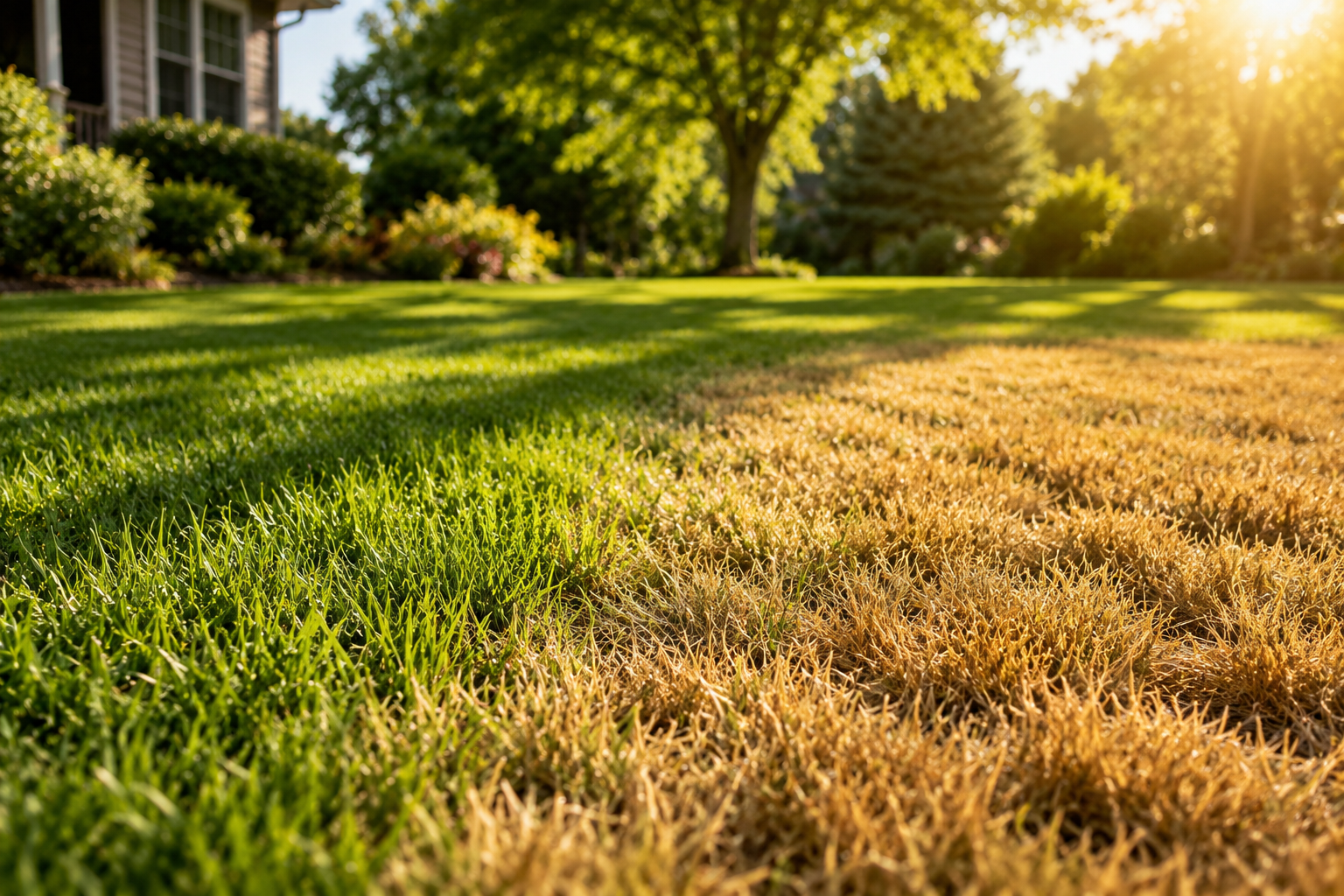
Suddenly, the lawn that looked perfect in May may begin showing signs of stress. Brown spots appear. Growth slows down. Areas start looking thin. Homeowners begin wondering:
"Did something go wrong?"
In most cases, the answer is no.
At Wicked Green, one of the most common conversations we have with homeowners every summer is helping them understand the difference between a lawn that is struggling and a lawn that is simply responding to seasonal conditions.
The truth is that summer is one of the most stressful times of the year for cool-season lawns. Understanding what to expect—and how to respond—can make all the difference in keeping your lawn healthy through the hottest months of the season.
Your Lawn Is About to Enter Survival Mode
Think about how you feel on a 95-degree day.
You probably slow down, seek shade, drink more water, and avoid unnecessary activity.
Your lawn does the same thing.
During spring, grass is actively growing. Temperatures are ideal, rainfall is more consistent, and plants are focused on producing new growth.
As summer temperatures rise, your lawn shifts priorities.
Instead of growing aggressively, it focuses on survival.
This means:
- Growth slows down
- Color may fade slightly
- Water demand increases
- Stress becomes more visible
- Recovery takes longer
This transition is completely normal.
Is Your Lawn Trying to Tell You Something?
One of the easiest ways to tell if your lawn is stressed is simply by walking across it.
Ask yourself:
Do your footprints remain visible?
If the grass doesn't bounce back after you walk across it, the turf may be lacking moisture.
Is the lawn taking on a grayish-blue color?
This is often one of the first signs of drought stress.
Are certain areas drying out faster than others?
This could indicate irrigation coverage issues, compacted soil, or localized dry spots.
Has growth slowed dramatically?
During periods of heat, slower growth is often expected.
If you answered "yes" to any of these questions, your lawn may simply be responding to summer conditions—not necessarily suffering from a serious problem.
The Biggest Summer Lawn Mistake Homeowners Make
When homeowners see brown grass, their first reaction is often:
"I need more water."
Sometimes that's true.
But more often, the issue isn't just the amount of water—it's how the lawn is being watered.
Frequent, shallow watering encourages shallow root systems.
Shallow roots struggle during hot weather.
Deep, infrequent watering encourages roots to grow deeper into the soil where moisture remains available longer.
A healthy lawn generally performs much better when it receives deep watering a few times per week rather than a little water every day.
Why Mowing Height Matters More Than You Think
Many homeowners unknowingly increase summer stress by mowing too short.
It seems logical:
Shorter grass means less mowing, right?
Unfortunately, shorter grass also means:
- More heat reaching the soil
- Faster moisture loss
- Increased weed pressure
- Shallower root systems
- Greater drought stress
During summer, taller grass acts like natural insulation.
Keeping your mowing height around 3.5 to 4 inches helps shade the soil, retain moisture, and protect the plant from extreme temperatures.
A simple mowing adjustment can have a surprisingly large impact on lawn health.
Summer Doesn't Mean Your Lawn Is Dying
This is one of the biggest misconceptions we hear every year.
Many cool-season grasses naturally slow down during summer.
Some areas may even enter temporary dormancy during prolonged heat and drought.
Dormancy is not death.
It's a survival mechanism.
The lawn is essentially conserving energy until cooler temperatures and more consistent moisture return.
This is why some lawns can appear brown in July and look fantastic again in September.
Summer Lawn Care Is About Protection, Not Perfection
Spring is often the season of rapid growth.
Summer is the season of protection.
Instead of focusing on creating new growth, homeowners should focus on preserving the health of the lawn they already have.
This includes:
- Proper watering
- Mowing high
- Managing weeds
- Monitoring insect activity
- Watching for disease pressure
- Reducing unnecessary stress
The healthier your lawn remains during summer, the stronger it will recover heading into fall.
Don't Forget About Insects
Summer heat isn't the only challenge your lawn faces.
Many lawn-damaging insects become most active during the hottest part of the season.
Common summer pests include:
- Grubs
- Chinch bugs
- Sod webworms
- Surface-feeding insects
The tricky part is that insect damage often looks very similar to drought stress.
Brown patches, thinning turf, and declining areas can sometimes be caused by insects rather than lack of water.
Early identification is critical because insect populations can expand quickly during warm weather.
Fall Success Starts Right Now
Many homeowners think lawn improvement begins in the fall.
In reality, fall success begins with summer preparation.
The lawn that recovers quickly in autumn is usually the lawn that was properly cared for during the hottest months of the year.
Every watering decision, mowing adjustment, and maintenance practice made during summer affects how your lawn performs later in the season.
What Wicked Green Wants Homeowners to Remember
If your lawn doesn't look exactly like it did in May, don't panic.
Summer lawns are supposed to look different.
Some slowing of growth, minor discoloration, and signs of heat stress are all normal parts of the growing season.
The goal isn't perfection during a heat wave.
The goal is maintaining a healthy, resilient lawn that can withstand summer stress and thrive when cooler temperatures return.
At Wicked Green, we help homeowners navigate the challenges of summer with proactive lawn care programs designed to strengthen turf, reduce stress, and keep lawns healthy through every season.
Because the best-looking lawns in fall are usually the ones that were protected all summer long.